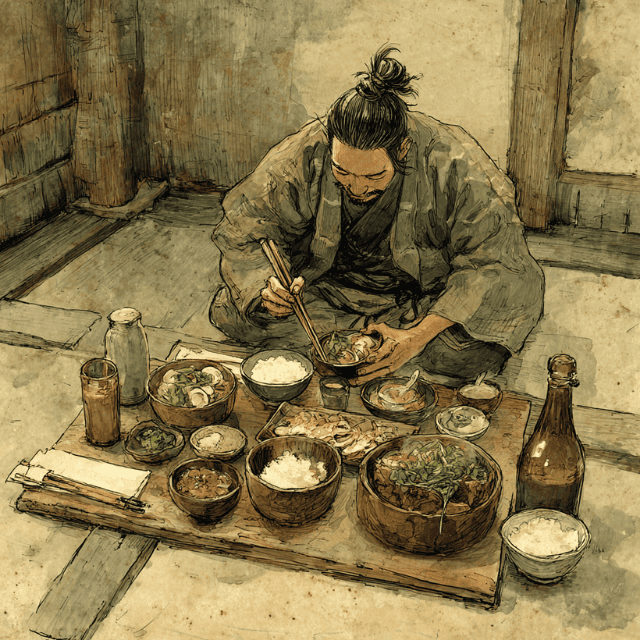
Chopsticks are an indispensable part of Japanese dining today, but their story in Japan stretches back many centuries. These simple pairs of sticks carry with them a rich tapestry of history, cultural meaning, and tradition. From their introduction in ancient times to their evolution into finely crafted utensils, chopsticks in Japan have come to symbolize far more than a way to eat one’s meal. This article explores when Japan began using chopsticks, why they were adopted, how Japanese chopstick use diverged from neighboring countries, how their design evolved over time, and the deep cultural significance and symbolism attached to these utensils. Along the way, we’ll encounter fascinating anecdotes, from imperial princes to divine bridges, that illuminate the special place chopsticks hold in Japanese life.
Historical Origins: When Did Japan Start Using Chopsticks?
The use of chopsticks in Japan can be traced back roughly to the early centuries of the first millennium AD, during the period of rapid cultural exchange with China and the Korean peninsula. Some historians believe chopsticks may have arrived as early as the Yayoi period (c. 300 BC – 300 AD) alongside the introduction of wet-rice agriculture, but it is in the Asuka period (6th–7th century AD) that clear evidence of chopstick use emerges. During this era, Japan eagerly absorbed elements of advanced Chinese civilization, from writing systems to Buddhism—and dining utensils were part of this exchange. By around 500 AD, chopsticks were already common in China and Korea, and Japan appears to have adopted them around the same timeframe.
Intriguingly, the earliest Japanese chopsticks were not used for everyday eating at all, but for religious rituals. Ancient Japanese meals were typically eaten with the hands, while chopsticks (called hashi in Japanese) were reserved for special ceremonial purposes. In Shintō rites, for example, food offerings to the gods (kami) were handled with chopsticks to avoid direct human contact, keeping the offering pure. The first chopsticks used in Japan were often made from a single piece of bamboo or willow, bent or joined at the top like a pair of tweezers. This design—two sticks fused as one—allowed priests to pinch offerings without actually touching them. These early ritual chopsticks set the stage for the tool’s introduction into daily life.
According to Japanese historical legend, one figure stands out in bringing chopsticks to the dining table: Prince Shōtoku Taishi (574–622 AD). Prince Shōtoku, a regent and cultured leader, dispatched envoys to the Sui Dynasty court in China to learn from its civilization. In 607 AD, an ambassador named Ono no Imoko returned from China with not only new ideas but also examples of Chinese dining etiquette, including pairs of chopsticks (accompanied by spoons). The prince was reportedly impressed by the refined manner of eating with chopsticks that he had observed at the Chinese court. He adopted the use of chopsticks for court banquets and formal meals in the Imperial Palace. This imperial endorsement in the early 7th century marks the first recorded instance of chopsticks being used for regular dining in Japan.
Once the imperial court began using chopsticks, the practice gradually filtered down to the aristocracy and eventually to common people over the ensuing centuries. By the Nara period (710–794 AD), there is archaeological evidence (such as preserved wooden chopsticks made of cedar and cypress) that indicates chopsticks were in use at least among the upper classes. The Kojiki (Record of Ancient Matters), Japan’s oldest chronicle compiled in 712 AD, contains references to chopsticks, suggesting they had entered the cultural consciousness by the early 8th century. Still, for some time, chopsticks were a luxury or curiosity for most people, with everyday folks likely continuing to eat with their hands or with simple wooden spoons for soups and porridges. It wasn’t until the Heian period (794–1185) and beyond that the habit of eating exclusively with chopsticks became common across all levels of society in Japan.
Why Japan Adopted Chopsticks: Cultural and Practical Reasons
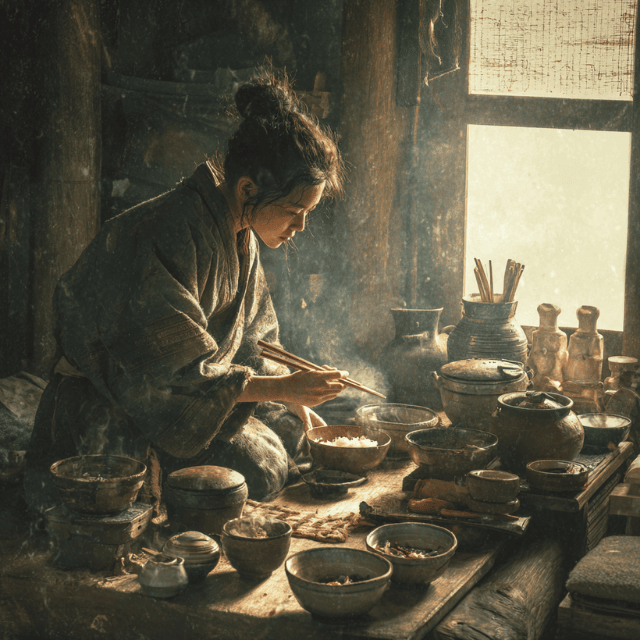
The adoption of chopsticks in Japan was driven by a blend of cultural, religious, and practical factors. One major influence was the flow of ideas from China, where chopstick use was associated with a sophisticated, courtly lifestyle. Emulating the Chinese way of eating was seen as a mark of refinement and progress. For the Japanese elite eager to modernize their court and society along Chinese lines, using chopsticks at meals became part of embracing the more “civilized” customs of their powerful continental neighbors. The elegance and cleanliness of chopstick etiquette, as opposed to eating with one’s fingers, made a strong impression on nobles like Prince Shōtoku. It’s easy to imagine how using two slim sticks to dine might appear more graceful to observers used to more hands-on methods.
Another reason lies in the philosophies that arrived with Buddhism and Confucian thought. Confucian ideals emphasized harmony, respect, and avoidance of violence or vulgarity. In China, the philosopher Confucius was said to prefer chopsticks over knives at the table, considering knives to remind diners of the slaughterhouse and thus disturb the harmony of a meal. When Buddhism spread to Japan (around the 6th century), it encouraged vegetarianism and non-violence, dovetailing with the idea that meals should be devoid of instruments of killing. Thus, dining with chopsticks — which have rounded tips and are associated with peaceful, communal eating — fit well with the emerging Buddhist-influenced food culture, where cutting and stabbing at the table were minimized. Instead, food was cut into bite-sized pieces in the kitchen, and diners used chopsticks to convey these morsels from plate to mouth calmly and respectfully.
There were practical considerations as well. The staple of the Japanese diet, especially by the time of the Nara and Heian periods, was rice – specifically short-grain, glutinous rice that clumps together when cooked. This type of sticky rice is actually very amenable to being eaten with chopsticks; one can easily pick up small masses of rice or grasp individual grains if needed. As Japanese cuisine developed, it featured many side dishes of vegetables, tofu, fish, and other bite-sized items that chopsticks could adeptly pinch and hold. The Japanese dining style also leaned towards serving food in many small bowls and plates for each individual rather than large communal platters. This individualized presentation made chopsticks even more convenient as the primary utensil. Over time, using chopsticks became second nature, and other utensils like knives or forks never took hold in traditional Japanese dining.
Religion provided further impetus for chopstick use. In Shintō belief, cleanliness and purification are paramount. Handling food with chopsticks kept hands (which might carry spiritual or literal impurities) from directly touching the food, an important consideration for offerings to gods or when eating in sacred contexts. This reverence extended into the home – using chopsticks, especially if one said a prayer of thanks (such as “itadakimasu”) before eating, gave meals a kind of ritualistic dignity. Thus, what might have started as imitation of a foreign custom was reinforced by native beliefs and practical benefits until it became an integral part of Japanese culture.
Early Japanese Chopstick Use vs. Chinese and Korean Practices
It is fascinating to compare how Japan’s use of chopsticks, especially in its early stages, differed from that of its neighbors China and Korea. Chopsticks originated in China, where by the time of the Han dynasty (around the 2nd century BC to 2nd century AD) they were already common utensils at the dinner table. The Chinese traditionally used chopsticks in tandem with ceramic spoons, particularly for soups or soupy rice (congee). They also often shared food from common dishes placed at the center of the table; the relatively longer length of Chinese chopsticks (typically about 25 cm or 10 inches) is well suited for reaching into shared plates or serving dishes. Early Chinese chopsticks were usually made of bamboo or wood, though bronze, ivory, or even silver chopsticks were used among the wealthy or imperial households. By contrast, Japan’s initial approach to chopsticks was much more limited and ceremonial, and only later became a universal dining tool.
In Japan’s formative chopstick years (7th–8th centuries), the utensils were reserved for the imperial court and shrine ceremonies, whereas in China during the same period even common folk were eating daily meals with kuàizi (the Chinese word for chopsticks). This means that if you walked into an average home in Japan in the 600s, you might not find chopsticks on the table; a similar home in China likely would have them. Over the next few centuries, as chopsticks spread through the Japanese populace, there was still a distinctive difference: Japanese diners eventually dispensed with spoons and other utensils for solid foods almost entirely, whereas the Chinese continued to use both chopsticks and spoons. In Japan, people learned to sip broth directly from the bowl (especially with miso soup), using chopsticks only to pick out the solid ingredients. This practice of lifting bowls to one’s mouth and drinking from them is a Japanese trait that contrasts with Chinese etiquette, where traditionally the bowl (especially rice bowls) can also be lifted but soup is often enjoyed with a spoon. In nearby Korea, which also inherited chopsticks early on (bronze chopsticks have been found in ancient Korean tombs dating to the Three Kingdoms period), a different tradition took root: Koreans use a matching set of a flat metal chopsticks and a spoon for virtually every meal. The spoon is for rice and soup, the chopsticks for side dishes. Japan, uniquely, came to rely on chopsticks alone for the most part, a practice sometimes noted as a distinctive point of Japanese dining culture.
Physical differences in the chopsticks themselves also emerged over time as each culture optimized the tool to their needs. Japanese chopsticks tend to be shorter in length (around 8 inches, or 20 cm, for men; slightly shorter for women) and taper to a pointed end. This design is excellent for grasping the small, delicate pieces of food common in Japanese cuisine and is especially handy for removing tiny bones from fish, a staple protein in the island nation’s diet. The pointed tips are also useful for precision when eating finely sliced or subtly textured foods. Chinese chopsticks, on the other hand, are often longer (about 10–10.5 inches, or 25–27 cm) and have a thicker, blunter end. Traditional Chinese chopsticks might be square or rounded at the top and do not narrow to as sharp a point; instead they have a relatively flat or gently rounded tip. The extra length is convenient for reaching across a large round table or into shared dishes, and the blunt tips are well-suited for lifting big chunks of food or scooping rice from a bowl. Korean chopsticks present another contrast: they are typically made of metal (often stainless steel nowadays, but historically bronze or silver for the aristocracy) and have a flat, rectangular shape. They are shorter than Chinese ones but usually a bit longer than Japanese, and because metal can be slippery, Korean chopsticks are made rougher or with etched patterns for grip, or kept flat rather than cylindrical to make them easier to hold. The use of metal is often attributed to Korean royalty’s old practice of using silver chopsticks as a poison-detection method (silver purportedly darkens upon contact with certain poisons like sulfur, although this was more a hopeful myth than reliable science).
Beyond shape and length, there were differences in social customs. In China, a household might keep a communal set of chopsticks – a bundle of identical pairs that anyone in the family could use, or that guests could be offered. In Japan, however, the practice of assigning each individual their own pair of chopsticks took hold. Even within a family, each member traditionally has personal chopsticks (sometimes stored in a personal case or with distinct colors/patterns to tell them apart). This custom ties into the Japanese belief in chopsticks as almost an extension of one’s body or spirit. Lending or mixing up chopsticks would be akin to sharing personal cups or toothbrushes in other cultures – not strictly unthinkable, but generally avoided. It’s also a reflection of the value placed on hospitality and cleanliness in Japan; offering guests disposable chopsticks or a freshly washed dedicated pair is preferred to having everyone grab from a communal pile. In contrast, Chinese dining historically had less of that personal-ownership concept for chopsticks (though of course people could have favorite pairs, it wasn’t ritualized in the same way). And in Korea, because each diner has both a spoon and chopsticks (usually presented as a matching set), personal sets are the norm in that context, but those sets were traditionally uniform in design (often plain metal) rather than highly individualized.
These early and evolving differences in chopstick usage across East Asia underscore how a simple utensil was adapted to fit local foods, values, and social norms. Japan’s singular path – from ritual tool to daily utensil used exclusively in most meals – gave Japanese chopstick culture a unique identity even among its chopstick-using neighbors.
Evolution of Chopstick Design and Materials in Japan
Over the course of Japanese history, chopsticks (お箸, ohashi) have undergone significant changes in form, material, and design to become the utensils we know today. The earliest Japanese chopsticks, as mentioned, were often a single-piece design hinged at the top. An example of this is the ancient type of chopsticks called kanjō-bashi, which were essentially like wooden tweezers. It wasn’t until around the 8th century that the two-piece, separate chopsticks became commonplace for eating. Once the Japanese began using true pairs of chopsticks, they primarily crafted them from abundant natural materials like wood and bamboo. Common woods included cedar, cypress, pine, or bamboo stalks, which could be carved and whittled into smooth sticks. These were initially undecorated and used in their natural wood form.
As chopsticks gained popularity, artisans started to pay attention to their craftsmanship. By the Heian period, nobles were using chopsticks made of fine materials such as lacquered wood, bone, or even jade and ivory in rare cases. Excavations from Heian-era noble residences have uncovered elegant chopsticks adorned with mother-of-pearl inlay or metallic foil, indicating that chopsticks had become objects of aesthetic pleasure and status, not just utility. The Japanese propensity for art and refinement found an outlet even in these dining tools. A significant development in chopstick design was the introduction of lacquerware chopsticks. Lacquer (urushi) is a natural varnish from tree sap that, when applied in layers, creates a durable, water-resistant, glossy coating. By the medieval era (around the Kamakura period, 1185–1333), we see references to chopsticks being coated in lacquer to improve their longevity and beauty. A lacquered pair could last much longer and was easier to clean, plus it offered a canvas for artistic decoration.
One region known for pioneering lacquered chopsticks is Wakasa, in present-day Fukui Prefecture. In the early Edo period (17th century), craftsmen in Wakasa (near the city of Obama on the Sea of Japan coast) began producing nuribashi — lacquered chopsticks — that were both resilient and visually stunning. They often sprinkled powdered seashells or gold dust between layers of lacquer, then polished the sticks to reveal speckled patterns (a technique called Wakasa-nuri). The result was a pair of chopsticks that gleamed with embedded mother-of-pearl or intricate designs, making each meal feel special. This craft continues to this day; in fact, Obama City remains one of Japan’s top producers of chopsticks, reportedly manufacturing around 80–90% of all chopsticks made in Japan. Many other areas also developed signature styles: for instance, the city of Wajima is famed for its lacquerware, and Yamanaka in Ishikawa Prefecture for its turned wood chopsticks. By the Edo period, owning a fine set of chopsticks became common even for ordinary people, and they were sometimes given as treasured gifts.
Another evolution in design was the standardization of shape and size. During the Edo period (1603–1868), when Japan enjoyed a long span of domestic peace and prosperity, cultural norms around dining became codified. It became customary, for example, that women use slightly shorter, more slender chopsticks than men. Women’s chopsticks might be about 6–7 inches long, fitting more comfortably in smaller hands, whereas men’s were around 8 inches. This convention was partly based on average body sizes of that era and was a gentlewomanly/gentlemanly affectation. Additionally, children’s chopsticks were made in even smaller sizes to train young hands from early childhood. The tips of Japanese chopsticks also became more tapered and rounded over time (to avoid scratching lacquer bowls or dishes). Some styles introduced grooves or roughened sections near the tips to help grip slippery food. By contrast, Chinese chopsticks remained more uniform and without tapered points, reflecting different dining needs.
Amid these refinements, chopsticks also intersected with Japanese tea ceremony culture. In the 16th century, the great tea master Sen no Rikyū elevated even the humblest objects to art status within the chanoyu (tea ceremony). Rikyū would personally carve fresh chopsticks from aromatic cedar or cypress wood for use in the light meal (kaiseki) served before a tea ceremony. These chopsticks, often called Rikyū-bashi, had a unique design: both ends were tapered and rounded, but the middle section was left slightly square or faceted for a better grip. The idea was that the host should provide brand new, clean utensils as a sign of respect and purity. After the tea gathering, the guests would often be invited to take the chopsticks home as a memento, since they were used only once. This practice underlines how chopsticks, by the late medieval period, were not only everyday implements but could also carry symbolic weight in rituals of hospitality and spirituality. Rikyū’s influence made the careful selection and presentation of chopsticks an essential part of formal Japanese dining aesthetics.
The 17th century also saw an innovation that would eventually sweep the world: the disposable chopstick. The first disposable chopsticks in Japan were made of bamboo and appeared in the Edo period, reportedly at a restaurant specializing in grilled eel. Eel is a delicacy that can leave an oily residue, so offering patrons bamboo chopsticks that could be split apart and thrown away after use proved convenient and hygienic. These early disposable chopsticks were called hikisaki-bashi (literally “pull-apart chopsticks”). Later on, in 1827, a craftsman and Buddhist monk named Sugihara Sōan in Nara Prefecture took the concept further. In the Yoshino region, known for its dense cedar forests and timber industry, Sōan found a use for the leftover wood scraps from manufacturing sake barrels. He crafted single-use chopsticks from thin slivers of this scrap cedar, creating what we now recognize as the classic wooden waribashi: two wooden sticks joined together at one end which you break apart before your meal. This clever reuse of wood that would otherwise be discarded made waribashi inexpensive and eco-friendly (at least when locally produced from scrap). The idea caught on slowly, but by the late 19th century disposable chopsticks had become common in eateries across Japan.
In fact, Japan was the first country to industrialize the production of disposable chopsticks. In 1878, during the Meiji era, mass-produced wooden waribashi became available, heralding the start of the disposable utensil era. Their popularity soared in restaurants, street stalls, and convenience dining, and they remain ubiquitous today in bento boxes and ramen shops alike. Modern waribashi are often made from fast-growing woods like aspen, birch, or bamboo, and while early disposable chopsticks were domestic products (often made from wood scraps as a secondary product of other industries), today Japan imports huge quantities from China to meet demand. The average Japanese person uses nearly 200 pairs of disposable chopsticks per year, which has raised environmental concerns. In recent years, there has been a push for sustainability, with many people carrying their own reusable chopsticks (my-hashi) to avoid waste, and some establishments returning to offering reusable utensils instead of throwaways.
Parallel to disposable chopsticks, the craft of luxury chopsticks also continued to flourish. Throughout the 19th and 20th centuries, artisans experimented with new materials and designs. While wood and bamboo remained the most popular (for their light weight and good grip on food), you could also find chopsticks made from bone, horn, porcelain, and various plastics as technology advanced. In the 20th century, styles like Edo kibashi emerged – these are high-quality chopsticks made by artisans in Tokyo, often from hardwoods like ebony or rosewood, and sometimes carved into pentagonal or octagonal cross-sections for a comfortable grip and unique aesthetic. They are finished smoothly at the tips to avoid damaging delicate dishware.
Today, Japanese chopsticks are not only tools but art pieces and cultural icons. Whether it’s a set of simple, unadorned bamboo sticks at a humble inn or a pair of exquisitely lacquered wedding chopsticks sprinkled with gold leaf, each carries the legacy of a long evolution. You can even visit specialty shops in Japan that sell nothing but chopsticks in hundreds of varieties — a testament to the enduring importance of these utensils in Japanese daily life and craft heritage.
Cultural Significance and Symbolism of Chopsticks in Japan
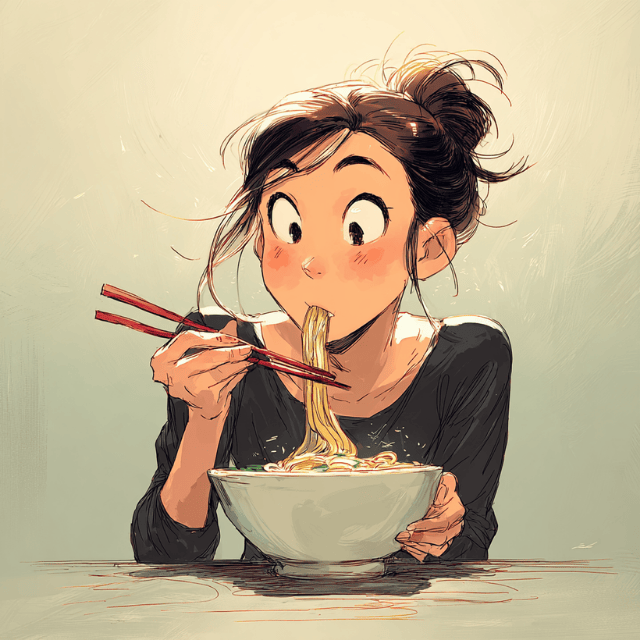
Chopsticks in Japan are imbued with cultural meanings that transcend their utilitarian purpose. They are considered an extension of the body and spirit, a conduit between people, and even a bridge to the divine. In fact, the Japanese word for chopsticks, “hashi,” is a homophone for “bridge” (橋), and this linguistic coincidence is often poetically remarked upon. Chopsticks, in a sense, bridge gaps: between the diner and their food, between individuals sharing a meal, and symbolically between humans and the gods.
In Shintō and folk belief, there is an old notion that when food is offered to the kami (spirits or gods), and a pair of chopsticks is placed with the offering, the deity will inhabit the chopsticks. If a person then uses those same chopsticks to eat the food (which, in a ritual context, is a way for worshippers to partake of blessed offerings), it is as though the gods and humans are sharing a meal together. The chopsticks become the “bridge” linking the earthly and heavenly realms. Because of this sacred role, chopsticks were historically treated with a sense of reverence. Even in modern times, certain rituals preserve this idea. During the Japanese New Year (Oshōgatsu), families often use special festive chopsticks called iwaibashi. These chopsticks are typically made of natural wood (like willow or pine) and have pointed ends on both sides. One end is used by the person, and the opposite end is said to be for the deity who is invisibly present at the feast. In practice, of course, people don’t see a god eating with the other end – but the symbolism is that the family is dining in the company of the divine for the New Year celebration. After the holiday, it’s customary to dispose of these chopsticks in a respectful way, often by bringing them to a shrine to be burned in a ceremonial fire, rather than simply throwing them away. This underscores that they are not ordinary implements but sacred for the occasion.
The personal nature of chopsticks in Japan is another key cultural element. It is said that a person’s spirit or energy resides in the tools they use frequently, and chopsticks, which touch one’s food and mouth every day, become almost like an intimate personal accessory. This is why traditionally each person had their own dedicated set of chopsticks at home. Parents would often give children their first set of nice chopsticks as a gift when they were old enough to learn proper table manners, signifying a step toward maturity. Even spouses typically do not share chopsticks; each has their own pair. Gifting chopsticks has evolved into a meaningful gesture: high-quality or decorated chopstick sets are common gifts at weddings, anniversaries, or housewarmings. A popular gift for newlyweds is a pair of his-and-hers chopsticks in a beautiful box. Such gifts carry wishes for the couple’s unity (two separate sticks working together as one) and for “couple harmony,” since a single chopstick by itself is not very useful – it’s the pair that makes a whole. In Japanese, there’s even a term “meoto-bashi” meaning “married couple chopsticks,” which refers to a set of two pairs of matching chopsticks, one slightly longer (husband) and one shorter (wife), symbolizing a harmonious union. The underlying message is that like two chopsticks, the couple will cooperate and support each other in life.
Chopsticks also feature prominently in etiquette and social propriety, with a host of dos and don’ts that are taught from childhood. These rules of chopstick etiquette, called 橋法 (kyōku) or more colloquially known as the list of “bad chopstick manners” (嫌い箸, kirai-bashi), are taken seriously because many of them tie into deep-seated cultural taboos or meanings. Below are some of the most important chopstick taboos in Japan and why they are avoided:
- Sticking chopsticks upright in rice (Tate-bashi): Never leave your chopsticks standing vertically in a bowl of rice. This resembles the way rice is offered to the deceased in Buddhist funeral rites (a bowl of rice with two chopsticks stuck in the center, placed on an altar). To do this at the table is an ominous evocation of death and is considered extremely bad luck.
- Passing food from chopstick to chopstick (Hashi-watashi): Do not transfer food directly from your chopsticks to someone else’s chopsticks. In funeral ceremonies, after cremation, the bones of the departed are passed from person to person using chopsticks in exactly this manner as they place the remains in an urn. Recreating this act during a meal is therefore a grievous breach of decorum, reminding everyone of death. If you want to share food, the proper way is to use the serving utensils or put the food on a small plate for the other person.
- Using chopsticks like a spear (Sashi-bashi): Avoid stabbing at your food with a chopstick to pick it up (for instance, skewering a piece of tempura because it’s hard to grab). This is considered crude and bad manners – food should be gently pinched, not impaled.
- Hovering or wandering chopsticks (Mayoi-bashi): Don’t hover your chopsticks aimlessly over dishes while you decide what to take. It’s seen as indecisive and uncouth. Similarly, saguri-bashi (rummaging through a dish for a preferred ingredient) and mogaki-bashi (picking something up then putting it back) are poor form.
- Clicking or waving chopsticks (Yose-bashi and others): Using chopsticks to move bowls or plates towards you is rude (that’s what your hands are for), and so is tapping them together or on a bowl (it recalls the behavior of beggars who hit bowls to solicit coins). Pointing at someone with chopsticks is also impolite, just as pointing with your finger can be rude.
- Rubbing chopsticks together (Kosuri-bashi): If you snap apart wooden disposable chopsticks, resist the urge to dramatically rub them together to remove splinters. In refined company, this can be seen as an insult – it implies you think the provided chopsticks are cheap and poorly made. A subtle rub, if truly necessary, is acceptable in casual settings, but it’s better to break them cleanly and use as is.
These are just a few examples out of dozens of named chopstick taboos in Japan. While no one expects a foreign guest to memorize all of them, following the most important ones demonstrates respect for Japanese culture. And many Japanese themselves take pride in handling chopsticks beautifully. The emphasis on proper chopstick use reflects broader Japanese values: mindfulness of others (e.g., not doing things that might disgust or offend fellow diners), a sense of ritual (treating even a casual meal with a bit of formality), and the weight of tradition (many rules stem from ancient religious practices or social customs).
The symbolic power of chopsticks is further seen in folklore and idioms. One famous parable with many variations throughout Asia is often told in Japan to illustrate the importance of cooperation. In this story, heaven and hell are compared: In both places, people sit at a banquet loaded with delicious food, and each person has a pair of very long chopsticks (sometimes said to be one meter long, far longer than their arms). In hell, the damned struggle to feed themselves – the chopsticks are so unwieldy that they cannot get any food into their own mouths, and they remain eternally hungry. In heaven, by contrast, the blessed have learned to use the long chopsticks to feed each other across the table. By caring for one another, everyone gets to eat and be satisfied. This simple story, often told to children, encapsulates a moral lesson about selflessness, but it’s no accident that chopsticks are the chosen instrument of the moral; the tale implicitly praises the cooperative nature of sharing food in Japanese (and East Asian) culture. It also echoes the idea that chopsticks are tools that connect people – in this case, literally enabling one person to nourish another.
Chopsticks even appear in life’s milestones in Japan. There is a ceremony called Okuizome (the “first eating”) performed for babies around the 100th day after birth, where the infant is ceremonially given food with chopsticks (the baby doesn’t actually eat it yet, it’s more of a symbolic gesture wishing that the child will never go hungry). Special tiny chopsticks might be used for this occasion. At the other end of life, chopsticks play a role in funerals as mentioned: after cremation, relatives use long chopsticks to pick up the bone fragments of the deceased from the ashes. Uniquely, this is done with two people together, each holding a set of chopsticks, to jointly transfer a bone – a final act of familial cooperation and an intimate, somber mirror of sharing food at the table. In this ritual, one chopstick is typically made of bamboo and the other of wood, representing the elements of water and fire coming together. It’s believed to create yet another bridge: this time between the living and the departed, helping the soul of the deceased transition to the next world. Because of this practice, Japanese people are deeply conscious of how chopsticks are handled in pairs and why passing anything from chopstick to chopstick is laden with cultural weight.
Through these many examples, it’s clear that chopsticks in Japan carry a significance that belies their simple form. They are at once personal and communal, earthly and sacred. They’ve been a constant companion to the Japanese people at mealtimes for well over a millennium, witnessing history from the courts of emperors to the humblest of homes. Learning to use them properly is like learning a language – the language of Japanese culture and manners. And sharing a meal with chopsticks is sharing in a tradition that connects the present to the past, and people to each other.
Conclusion: The Enduring Legacy of Ohashi
The journey of chopsticks in Japan—from their ancient introduction as a foreign curiosity, to holy instruments of ritual, to everyday eating tool—beautifully illustrates how culture is a living, evolving force. In adopting chopsticks, the Japanese people made them distinctly their own, adapting their form, crafting them into art, and layering them with meanings unique to Japan. Today, a pair of chopsticks on a Japanese dinner table embodies thousands of years of history and tradition. They serve as a reminder of Japan’s connections to its Asian neighbors and its own innovative spirit: an imported utensil transformed into a symbol of harmony (wa) and respect.
Sitting down to a meal in Japan is more than just satisfying hunger; it is participating in a cultural heritage. Whether one is mindful of it or not, using chopsticks correctly and graciously pays quiet homage to that heritage. From the smooth lacquer that might cover them (born of artisans’ dedication), to the very act of saying itadakimasu before picking them up (a gratitude for what is received), to the care in handling them through the meal and laying them down properly at the end — every step is steeped in meaning. Even as modern life brings forks, knives, and global cuisines to Japan, the chopstick remains king at the Japanese table, its practicality unmatched for local dishes and its cultural resonance irreplaceable.
In a rapidly changing world, the persistence of the humble chopstick in Japanese daily life is a comforting constant. It links generations together: children learn to hold them as their parents and grandparents did. It links communities: a shared platter of sushi or a hot pot is navigated by everyone’s chopsticks politely serving others before self. And, as legend would have it, it links mortals and gods. Two slender sticks, balanced in hand, carry the weight of so much more than the bite of food they lift. They carry the spirit of a culture that finds meaning and mindfulness in the everyday act of eating. In Japan, the story of chopsticks is a story of connection — truly a story of “bridges” — between past and present, between people, and between the human and the divine.